United States
Jun 1944
Normandy: the build-up
Landing ships, rhino ferries and the Sherman squadrons going ashore.
Complete collectionComing soon
Over 100,000 primary sources
German, Russian, American, British, Canadian and French records — scanned at archive resolution, dated, researched and catalogued image by image.
What is in here
Everything is catalogued to the same standard, whether it is a single photograph or a run of 434 maps covering every day of a battle.
Whole operations in sequence rather than scattered singles — so you can follow a campaign being fought, not look at one frozen moment.
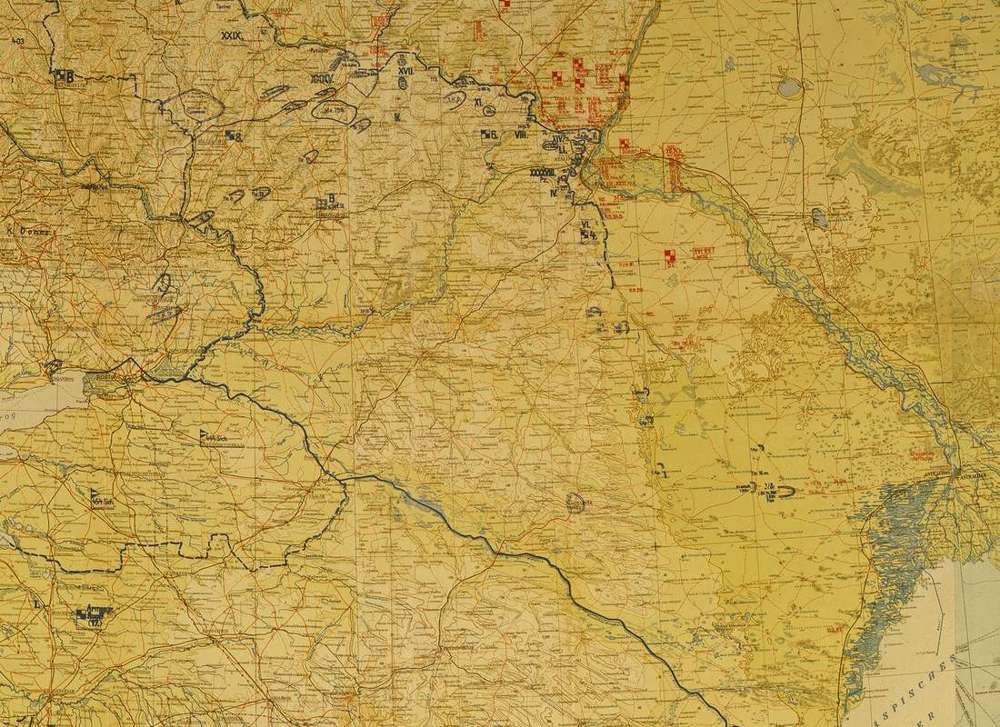
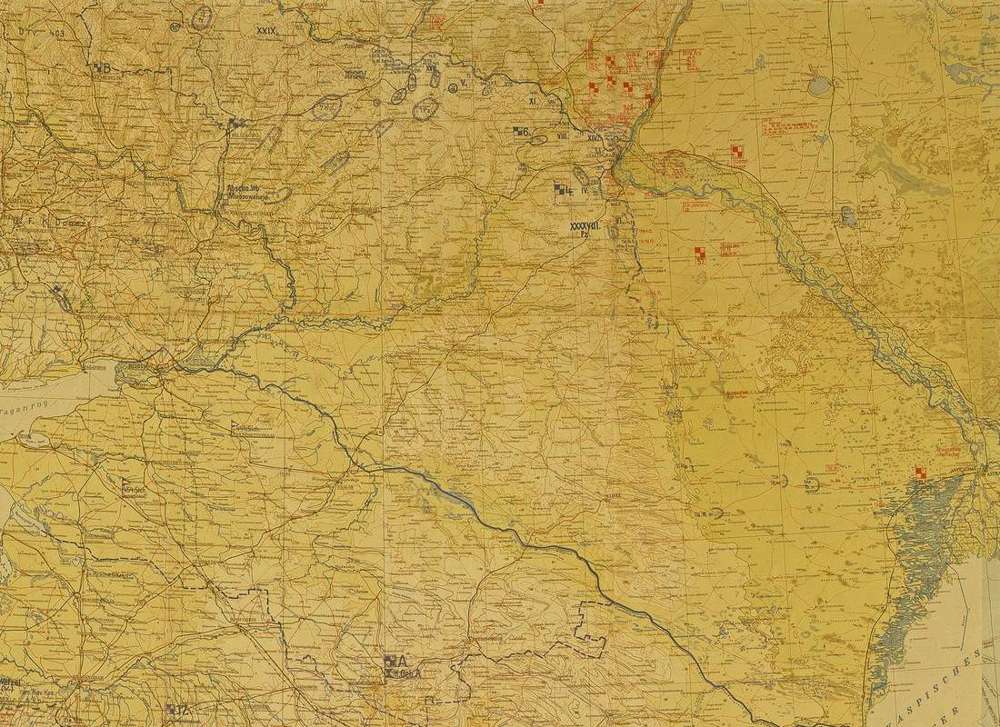
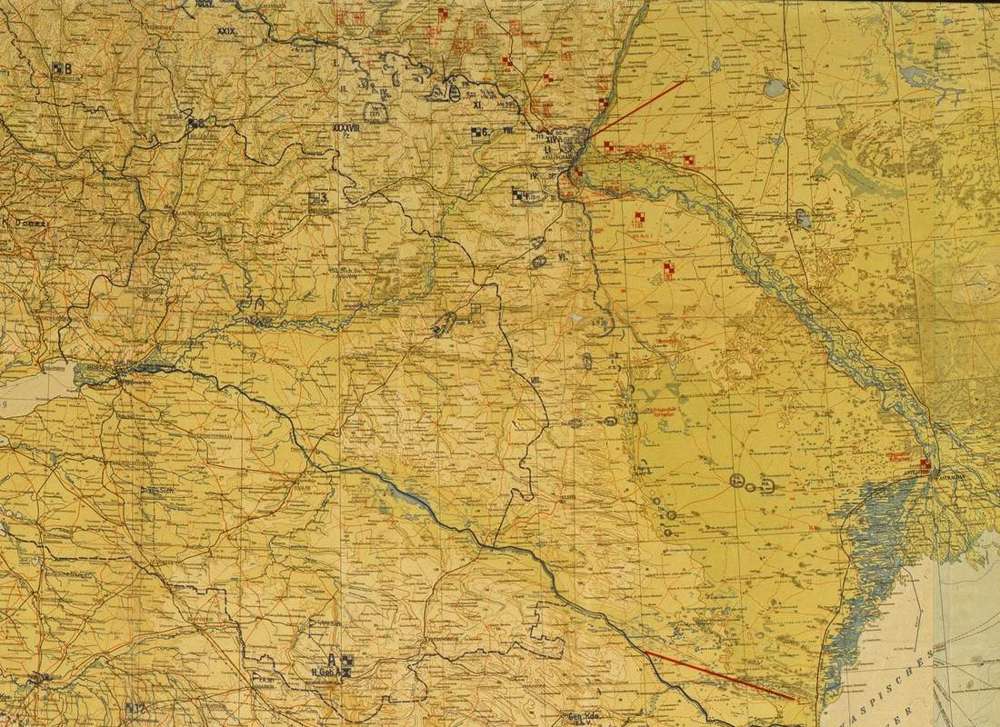
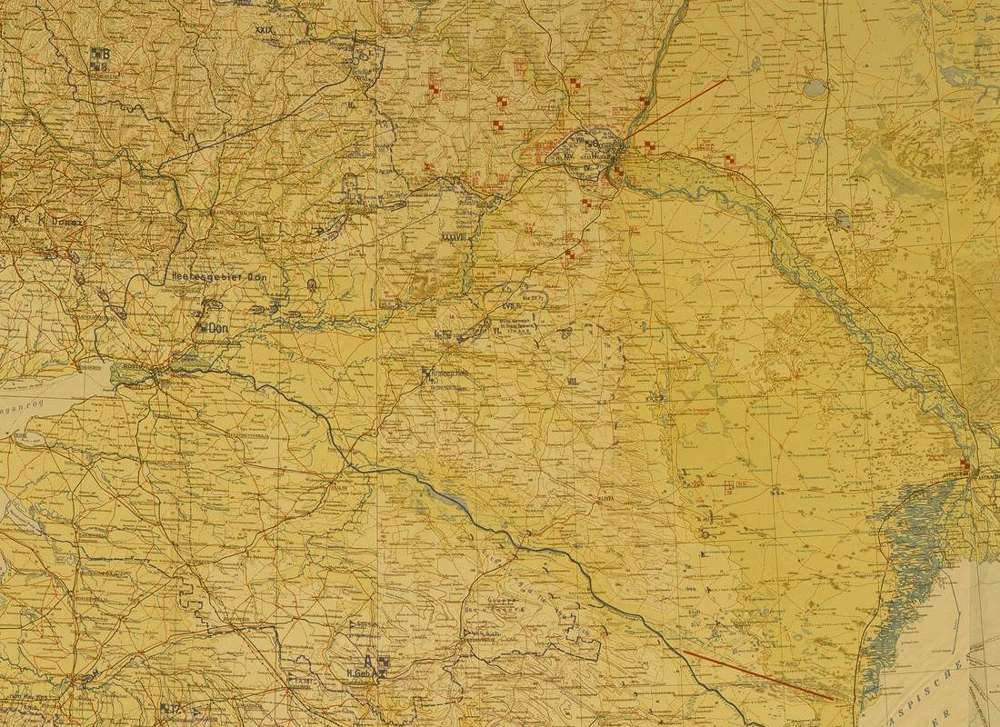
Browse the collections →434 OKH situation maps from July 1942 to February 1943. Watch the front line move across nine real dated sheets.
Open the map →One image, one campaign or the whole archive. Instant download at archive resolution, with the caption and keywords already inside the file.
See access and pricing →German Official Photographs
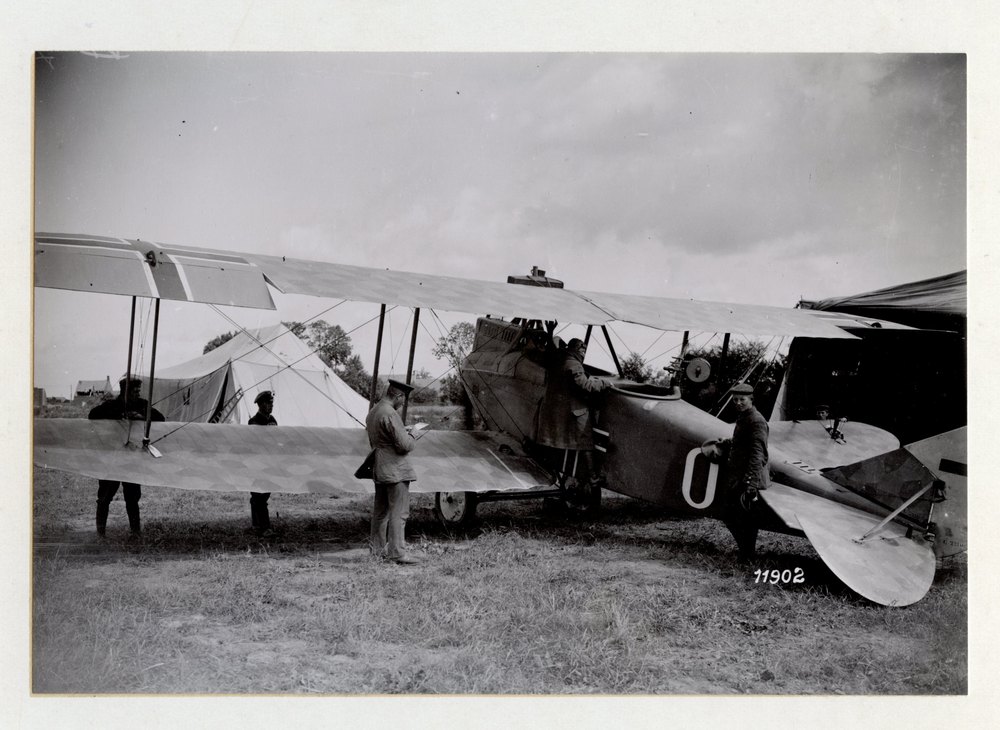
With an aviation section, Western front. German official photograph issued by Bufa, the Bild- und Filmamt, the German army's picture and film office. Bufa negative 11902.
Contact
Advertising licences, archive access for publishers and production companies, whole collections, permissions and anything about an order you have already placed. A real person reads these and we aim to come back within one working day.
Our licences
Our images are supplied under an access and service agreement rather than a copyright licence. Almost everything in this archive is a reproduction of a photograph, map or document whose copyright has long expired, and Piemags asserts no copyright in those originals. What you pay for is our high-resolution reproduction, the caption, date and keyword research attached to it, and our supply of both to you. Every agreement is worldwide and non-exclusive, with an instant full-resolution download.
Choose the licence that matches how you will use the image.
Pay securely by card, then download instantly at full archive resolution, with no watermark.
Plain terms, printed on your receipt and kept with your order, so you can always see what you bought.
Licence types and pricing
Every tier delivers the same full-resolution file. You are choosing what you may do with it, not how big it is.
Loading prices…
Complete collections
A collection is the entire accessioned body of images in the order they were taken or dated, with the battle guide, order of battle and timeline where we have them. From $149 for a collection of up to around 250 images, $249 up to a thousand, $399 above that.
Collections carry the Personal Use and Newsletters and Presentations terms only. Editorial publication or commercial use of images from a collection is priced separately — a single-image editorial licence, or an Archive Access agreement, covers those. This is deliberate: at well under a dollar an image, a collection is priced as a research resource, not as a cheap way to buy publication rights.
By enquiry
Larger agreements are quoted individually, so you only pay for the reach you actually need. Tell us the usage and we will come back with a firm price.
What we do not sell
Other libraries will sell you a full buyout: exclusive, perpetual rights, with the image withdrawn from sale. We do not offer that on this archive, and we would rather explain why than quietly leave it off the list.
You cannot grant exclusivity in something you do not own. The originals here are public domain: the same photograph may sit in a national archive, on Wikimedia, or in somebody else's collection, and nothing we sign can change that. A buyout would be selling you a promise we are not able to keep. Where we hold an image we actually own outright, that is stated on the image page and different terms apply.
Image download packs
Need several images for a project? A multi-image pack is one set price for the whole set instead of licensing each image separately. Each download carries the rights of the licence the pack was sold at and nothing beyond it.
Downloads must be redeemed within 12 months of purchase and unused downloads expire. One image uses one download, however many times you use it within that licence. Packs are non-transferable and cannot be shared between clients or organisations. Any pack image can be upgraded to a higher licence later by paying the difference.
Editorial use informs, illustrates or educates — news, blogs, books, documentaries, teaching and research. It may not promote or advertise anything.
Commercial use promotes a product, service or brand, and needs an Advertising agreement, priced on application.
Personal, presentation and business terms are worldwide with no time limit. Editorial terms are worldwide for five years from purchase, which is long enough for a book to go out of print.
Advertising is priced by the territories and the duration your campaign actually needs.
No resale, redistribution or sub-licensing, and no uploading to another stock library. Merchandise, product packaging and mass production need a separate agreement.
Nothing here transfers ownership of anything, and nothing here restricts what you may do with a public domain original you obtain somewhere else.
Licensing FAQ
The work of finding it, scanning it properly, researching what it shows, and handing it to you in a usable state. A catalogued, captioned, dated, keyworded high-resolution reproduction is a different thing from a low-resolution copy of unknown origin found in a search engine. You are paying for that, and for the record group and accession number that let you cite the original with confidence. You are not paying for permission — the original needs none.
You receive the file and the right to use it under the terms you chose. You do not acquire copyright in the original, because there is none left to acquire, and you do not acquire any exclusive right against anybody else.
Yes, under the Online Editorial terms for ordinary and non-commercial posts. A post promoting a product, service or brand needs an Advertising agreement.
For informative, historical or educational video, the Online Editorial terms apply. For sponsored content or business promotion, Advertising applies. Broadcast documentaries with significant reach are usually better served by an Archive Access agreement — ask us.
Yes. Small Business Internal covers an organisation of up to ten staff; Large Business Internal covers any size. Both exclude external advertising and public-facing marketing.
Yes, under Newspapers, Magazines and Books — interior placement, any size, worldwide, five years. National or international circulation and cover use are priced on application.
Not under these terms. Redistributing or reselling our reproduction, or adding it to another library, is not permitted. This is an agreement about our file and our research, and that is what it restricts.
Not under the standard terms. Merchandise and product packaging need a separate agreement — tell us what you have in mind.
Yes. Move to a higher tier by paying the difference. Send us the image reference and your original order number.
No, and we explain why above: the originals are public domain, so exclusivity is not ours to sell.
We write custom agreements for film and documentary use, publishing programmes, exhibitions, high-volume distribution and ongoing archive access for researchers and production companies. Tell us about the project and we will help you license it properly.
Your account
An account keeps your lightboxes and your order history. It takes about thirty seconds and we ask for nothing beyond an email address.
If you have bought from us before, use the same email.
No card details needed until you buy something.
Your account
Put in the email you signed up with and we will send you a link. It works once, and it expires after 45 minutes.
Your account
Your cart
Your account
Each link is made fresh when you click it and lasts fifteen minutes, so nothing you paste to somebody else keeps working.
Changing it signs you out on every other device.
Where it comes from
What you get
The collections
Complete runs rather than scattered singles — the whole sequence of an operation, in order, so you can follow a campaign being fought rather than look at one frozen moment.
The advance into the Soviet Union — armour, wrecked columns, burning villages.
Battleships, cruisers and the first U-boats, with every German caption transcribed.
Landing ships, rhino ferries and the Sherman squadrons going ashore.
Barrage balloons, LSTs and the logistics of invasion, photographed from the air.
The OKH daily situation maps — 434 sheets, one for every day of the battle.
The city fighting, the Kessel and the surrender, sheet by dated sheet.
Heavy guns, tractors and gun crews on the Western and Eastern fronts.
Biplanes, observers and the first aircraft ever flown in anger.
Floatplanes, catapults and the ships that carried them.
How every image is prepared
A hundred thousand images gathered from the world's archives, then given the thing that makes them usable: a caption that says what they show, a date, and keywords that actually find them.
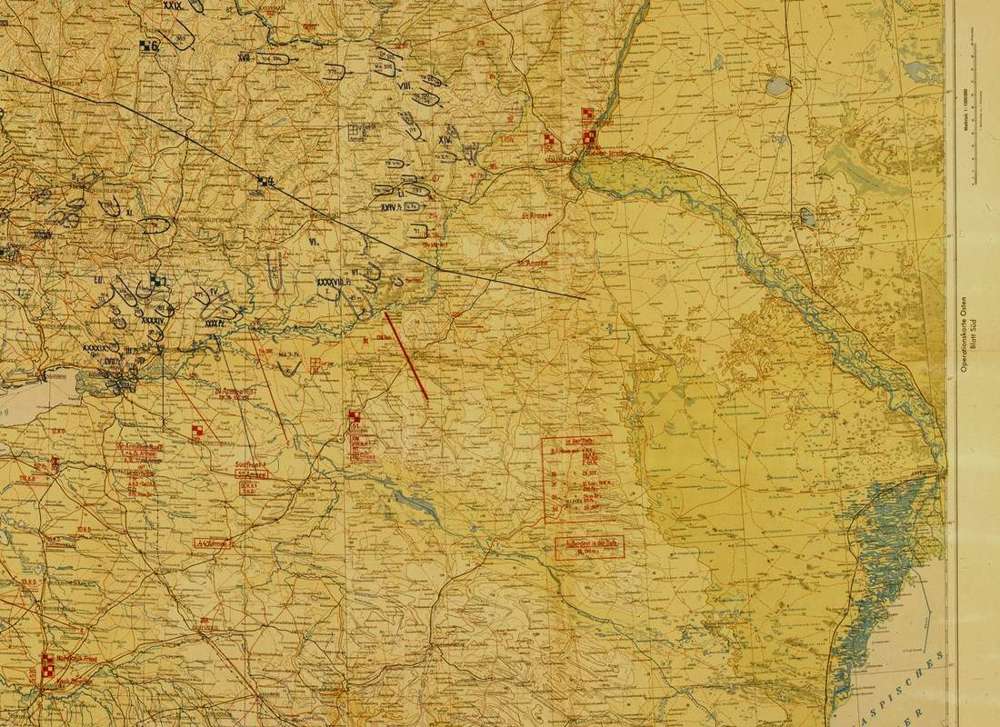
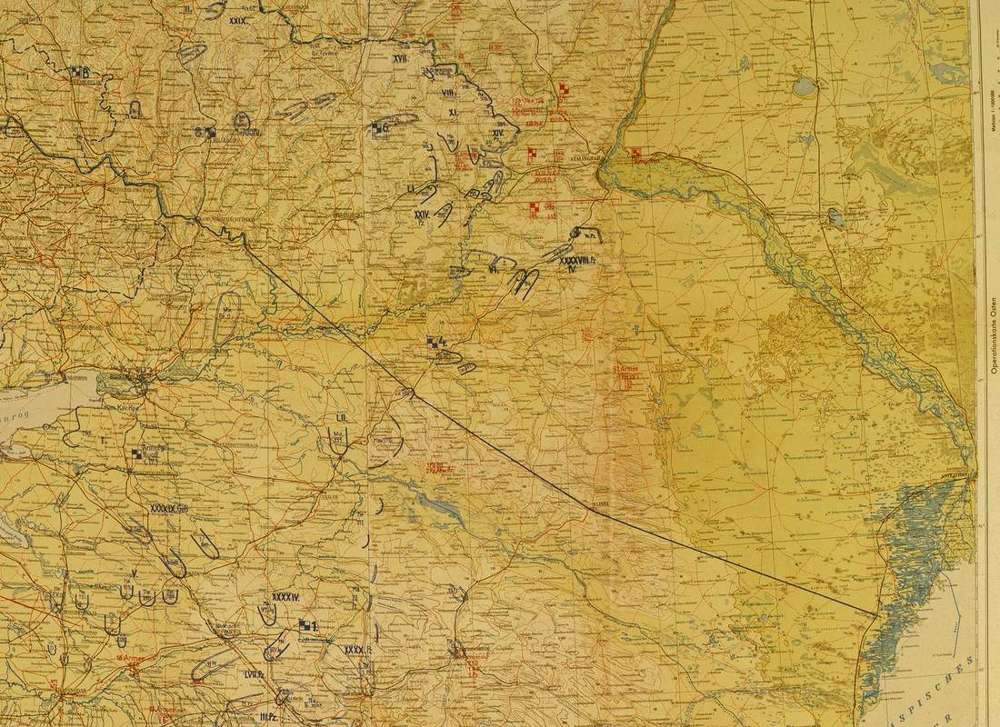
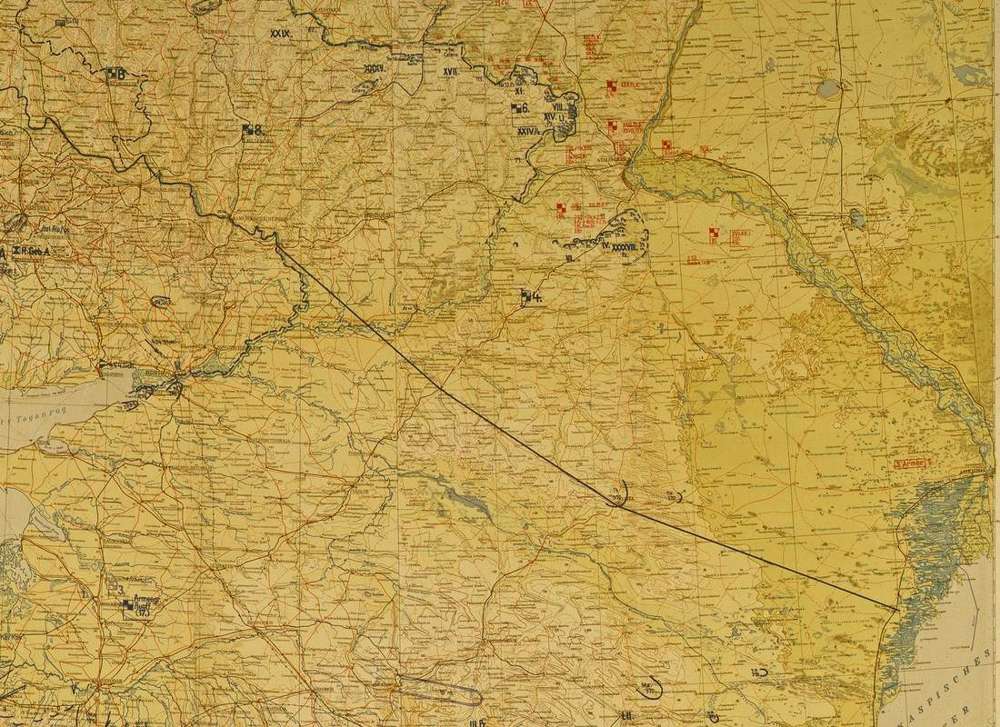
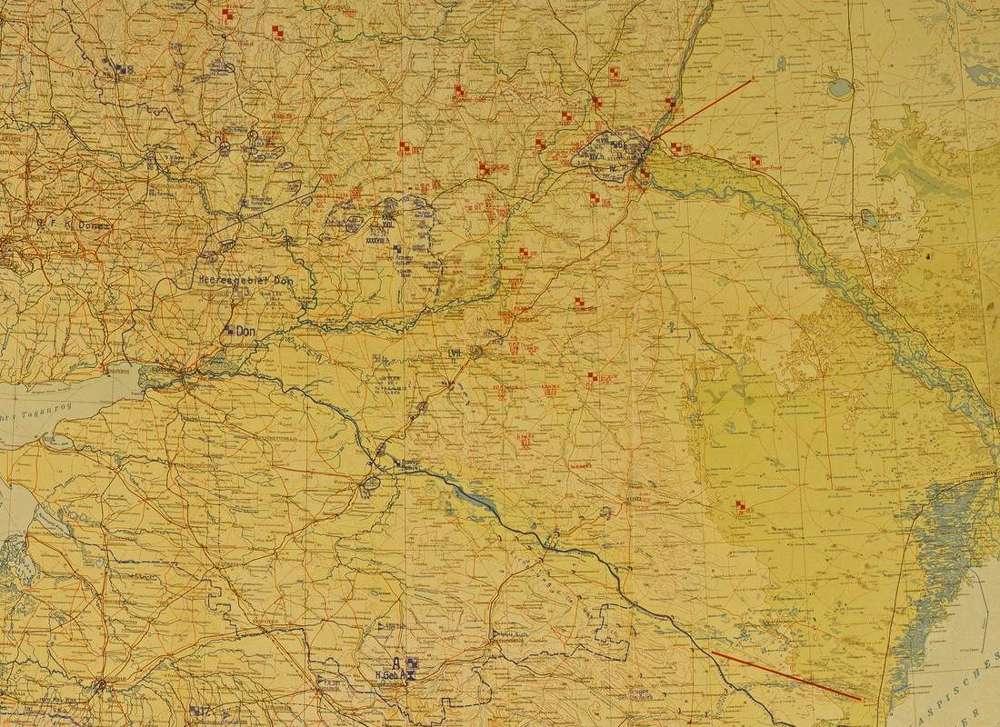
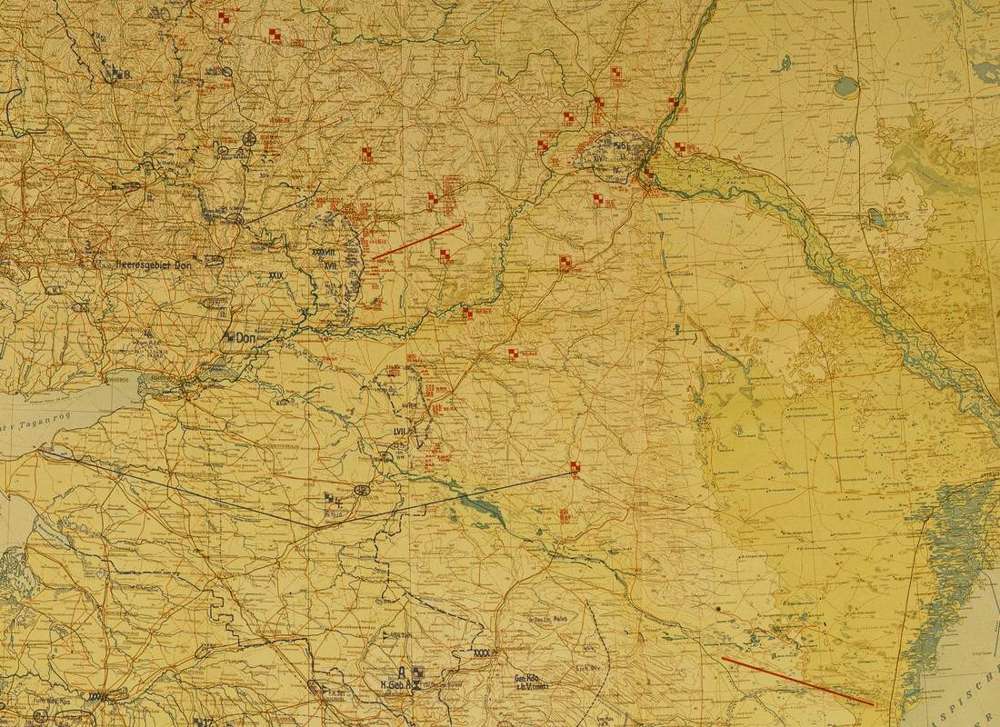
Lage Ost · 434 sheets · 17 July 1942 – 2 February 1943
Nine real sheets from the run, aligned to the same view of the Don bend and the Volga at Stalingrad. The front line you see is the one the German General Staff drew that evening. Nothing here is redrawn or reconstructed.
Access
Instant download at full archive resolution, no waiting on an email and no watermark on what you have paid for. An account takes about thirty seconds and keeps every download you buy, so you can fetch it again whenever you need it.
Loading prices…
What you are licensing
The original photographs, maps and papers are historical works and Piemags asserts no copyright in them. What you buy is our reproduction and the research attached to it — the caption, the date, the keywords and the transcription — supplied under an access and service agreement rather than a copyright licence. That position is stated on every page and printed on your receipt, so there is never any doubt about what you have bought.
Schools · Colleges · Universities · Libraries
One payment a year. Photographs, situation maps, staff documents and reports from 1914 to 1945, available to every member of staff and every enrolled student, anywhere in the world, at full teaching resolution and with the caption, credit and rights status written into each file.
What is in it
Every item is catalogued individually: a written caption, researched keywords, a date where the document carries one, and a reference number that can be cited. Collections are catalogued and published in turn, and everything added during your subscription year is included at no extra charge.
Some collections carry difficult material — the camps, the ghettos, the dead, and the propaganda apparatus of a dictatorship. It is reproduced with its original captions and without editorialising, and the catalogue describes what an item shows so a teacher can make the decision before it is on the screen.
What it costs
No per-seat charge, no download limit, and no charge for material added during the year. Invoiced against a purchase order, payable in thirty days. Institutions outside the United Kingdom pay the same fee in sterling.
One school or sixth form. Every member of staff and every enrolled pupil, in class and at home. Classroom, learning platform and examination use.
Ask for a quoteFurther education colleges, public libraries, museums and county archives. Adds on-site access for visitors, exhibition use on your own premises, and interlibrary supply of single items.
Ask for a quoteUniversities and research institutions, every department and every campus. Adds dissertations, theses and repository deposit, course packs, and academic publication with credit.
Ask for a quoteMulti-academy trusts, school groups and library consortia are priced for the group — one agreement, one invoice — or can be taken school by school, whichever suits your budgets. A thirty-day trial with full access is available before any commitment.
What you may do with it
If something you need is not listed here, ask. The answer is usually yes.
Work already made stays made. An essay, thesis, article or course pack produced during the subscription can be kept and used afterwards without limit. Copies held on a learning platform are removed when the subscription ends, unless they form part of a completed student submission.
What you take away
Every download carries its caption, keywords, credit and rights status inside it — readable in Lightroom, Bridge, Photoshop, Windows Explorer and Finder.
Where these come from
Stated plainly, because a school or a university library has to be able to answer this question before it can buy anything.
The credit is the one thing asked in return, in every use including social media: [Title], [date]. The Wartime Archive, ref. [reference]. wartimearchive.com
How to buy
Rather than around a card checkout.
Questions
Everyone employed by the institution and everyone enrolled on a course, including part-time and distance students, and anyone teaching your students under contract. For a college, library or museum it also covers members of the public using the collection on your premises. It does not cover alumni or the general public off-site.
Yes. A completed thesis can be deposited in your institutional repository, including an open repository, with the credit shown. Most image licences refuse this and it causes real difficulty at submission, so it is granted here rather than left to be argued about.
Full archive resolution, the same file a publisher or a broadcaster buys — no crops, no downsampling, no watermark. There is no reduced education version and nothing is held back for a higher tier. A map sheet can be printed at wall size; a photograph will take a full page at print quality with room to spare.
Access to the archive stops. Anything already made with it — essays, theses, articles, printed course packs — can be kept and used without limit, permanently. Files held on a learning platform should be removed within sixty days, unless they are part of a student's completed submission.
No. A department can download an entire collection on day one.
Yes, and it is cheaper per school. One agreement, one invoice, every school in the trust covered. It can also be bought school by school if that suits your budgets better.
Yes, and everything added during your year is included at no extra charge. The holdings run to more than eighty thousand photographs and maps and over three thousand documents, and collections are catalogued and published in turn. Nothing goes up until it is catalogued to the same standard: a written caption, researched keywords, a date where the document carries one, and a citable reference.
Ask. The holdings are far larger than the published catalogue and the cataloguing order is not fixed. Subscribers get first call on it, so if you need the North Africa maps for a module starting in January, that is a reason to catalogue them next.
The collections include photographs of prisoners, of the dead, of the ghettos and of the propaganda apparatus of a dictatorship. They are reproduced with their original captions and without editorialising, because that is what an archive is for. Teachers know their own classes; the catalogue describes what an item shows so the decision can be made before it is on the screen.